Conquering Fear of Flying with CBT: Soaring Beyond Flight Phobia
Written by Alpar Szotyori, RP. Phobia Expert in Ontario
Last updated April 15, 2026
Aviophobia is the fear of flying. It is also known as aerophobia or flying anxiety. It is a prevalent and distressing fear affecting countless people worldwide. If the thought or sight of an airplane leads to intense anxiety or fear, you might be dealing with flight phobia. This phobia can impact your life in a meaningful way. Leading to avoidance behaviours and disruptions in routine activities.
What is Flight Phobia?
Flight phobia extends beyond a simple dislike or discomfort with flying. It involves an irrational fear that can lead to extreme anxiety or even panic attacks. This fear isn't confined to the actual act of flying. Even the thought or depiction of airplanes can trigger intense distress.
Distinguishing between a general dislike of flying and a genuine phobia is crucial. Flight phobia often leads to avoidant behaviours. People may such as stay away from airports or declining travel opportunities.
The Origins of Flight Phobia
The causes of flight phobia can vary from person to person. While there isn't a single cause, several factors may contribute to its development:
Evolutionary Factors. Some researchers suggest that humans evolved to be cautious about flying. This is because flying is unfamiliar and can be risky.
Negative Experiences. Traumatic experiences during flights or distressing encounters related to air travel can contribute to the development of flight phobia.
Learned Behaviour. Watching others show fear or anxiety about flying, especially as kids, can shape the growth of this phobia.
Media Coverage. Frequent news reports about plane crashes or aviation incidents can trigger or reinforce a fear of flying.
It’s important to know that not everyone can identify the origin of their flight phobia
Recognizing Fear of Flying Symptoms
Flight phobia can manifest with a range of physical and psychological symptoms, including:
Intense Anxiety. Rapid heartbeat, shortness of breath, sweating, and panic can happen during flights. They may also occur just by thinking about flying.
Avoidance Behaviour. Going to great lengths to avoid air travel, airports, or activities related to flying.
Negative Thoughts. Thoughts about flying can be intense and often irrational. People worry about threats, even when the real risk is low.
Treating Fear of Flying with CBT
The good news is that flight phobia is easy to treat. Many effective ways can help you beat this fear. One of the most successful methods is cognitive-behavioural therapy (CBT).
Learn more about Online CBT Therapy for Phobias.
CBT involves:
Identifying Unhelpful Beliefs. Recognizing and challenging irrational beliefs and thoughts that contribute to the fear of flying.
CBT Exposure Therapy. Exposing people to flying or flight-related situations helps them face their fears.
Relaxation Techniques. Learning and practicing relaxation techniques to manage anxiety associated with flying. However, we should schedule relaxation strategies so that they do not become safety behaviours.
For those with severe flight phobia, a combination of mental health treatment and medication may be recommended to alleviate symptoms of anxiety and panic attacks. You can schedule an appointment with your family doctor to discuss medication options.
Exposure Ideas for Flight Phobia
Exposure works best if you can do something challenging every day. This can make treating flight phobia a challenge. Meeting with a therapist can help you uncover your core fears. An experienced therapist can also help you develop a personalized plan. Here are some exposure ideas for fear of flying:
Look at images of airplanes
Watch videos of flights (takeoff, turbulence or crashes)
Imaginal exposure of your core fears (e.g. feeling a trapped and you cannot escape, turbulance, or a crash)
Virtual reality of flights
Visit a flight simulator or become a pilot for a day at a facility like AviaSim
Book a short flight to practice your exposure exercises in a real-world setting.
If you worry about having a panic attack, interoceptive exposure (exposure to physical sensations) will likely be very helpful
If you worry about being in an enclosed space, consider practicing exposure in tight spaces (e.g., closet, elevator, car, train, etc)
Books for Fear of Flying
Mastering your Fears and Phobias: Workbook (Chapter 13: Flying Phobias)
5 Tips for Fear of Flying
Recognize Negative Thoughts. Recognize the negative thoughts and beliefs that make you fear flying. Examples include "I'm going to crash" or "I can't handle this."
Challenge Unhelpful Beliefs. Use rational thinking to confront these unhelpful beliefs. Ask yourself questions like "What evidence do I have that supports this belief?" or "What's the likelihood of this fear coming true?"
Replace Negative Thoughts. Replace negative thoughts with more realistic and balanced ones. For example, say "Flying is statistically safer than driving" instead of "I'm going to crash."
Gradual Exposure. Start by exposing yourself to flying-related situations. Watch videos of planes taking off. Visit an airport without flying. These less stressful steps can help reduce anxiety.
Relaxation Techniques. Try relaxation techniques like deep breathing, progressive muscle relaxation, or mindfulness meditation. These can help ease anxiety symptoms you may feel when flying. Schedule your relaxation techniques. This way, they won't turn into safety behaviours.
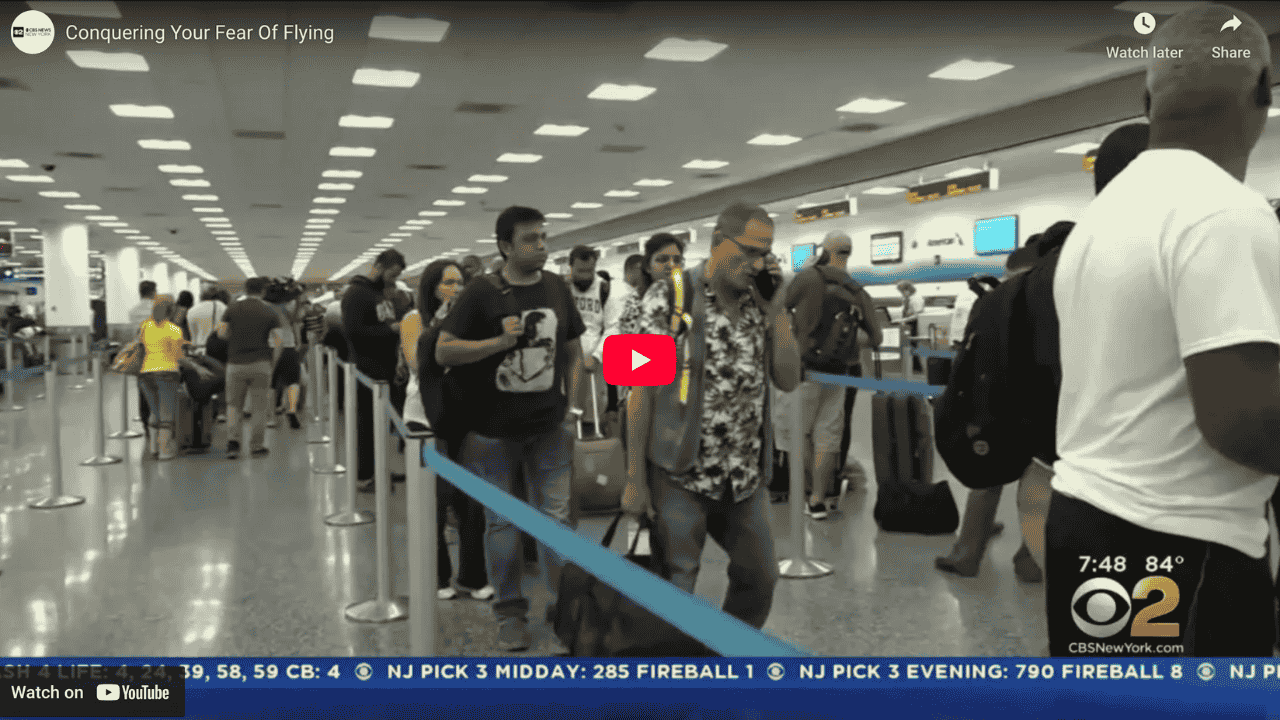
Conquering Your Fear of Flying (Source: CBS)
Connect with a CBT Therapist for Phobias
If you or someone you know fears flying, getting professional help is important. It's a key step to overcoming this fear. Our therapists at Virtual CBT Psychotherapy provide trained exposure therapy for flight phobia. You can read more about our anxiety therapy or online phobia treatment.
Take the first step toward a fear-free life by booking a free consultation with our CBT experts. Click the tab below to book your free 15-minute call. We’ll match you with a therapist who can help you with your fear. Remember, you are not alone, and there is hope for a fear-free future.
Written by Alpar Szotyori, RP. Phobia Expert in Ontario